





How to Install Pex Pipe Waterlines in Your Home. Part 2. Plumbing Tips!

0%
ADVERTISMENT – become one of us and contribute knowledge
You Might Be Interested In


Comment (0)
LEAVE YOUR COMMENT
You must be logged in to post a comment.
Wait, that didn't make sense to me. If you have low well pressure you would want the smaller diameter instead of the larger to keep the pressure up through the run. Using the larger diameter kills the volume pressure going through the line. Please explain why you said the opposite.
Great vids very professional and easy to follow….
My home is 26 years old and the copper is getting pinholes , I have a friend that's a master plumber , and he recommends to start replacing the copper with Pex , I hear great things about it and bad , I think a lot of the bad is poor installation , and like allproducts it appears Pex has a good , better , and best , I will be hiring a plumber , I feel I am a good diyer , but I find paying someone that knows the trade saves money and heart ache in the future .
Are there spacing requirements to keep pex away from electrical wiring?
too many small pieces , why not go straight to the faucet with a long pex? wtf?
C cvv erag
Excellent video series Al. Very informative. It looks like you are using PEX-B correct? I know with the PEX-A style the shortest piece of pex you can use is 2 inches. It has something to do with how close you can expand each end of the connection. Does PEX-B have the same restrictions? Have you ever used PEX-A and do you like the crimp connection/tools or cinch connection/tool better?
Thanks for your time and all the great information.
Ron.
Dude speed up . Talk an work at the same time. Ur talking way to much.
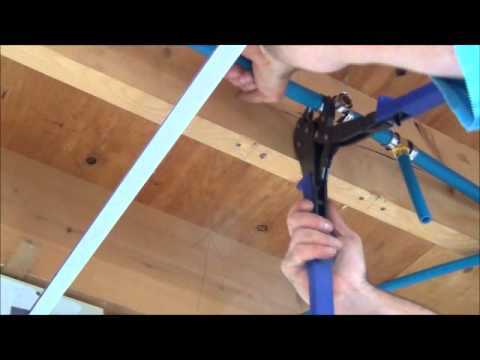
Excellent video. Thank you! I did not understand, though, why it is good to slightly angle the T fittings, or why it is good to place then near the joists. Can you explain? Thanks!