How and Why to Maintain a Temperature-and-Pressure Valve | Ask This Old House

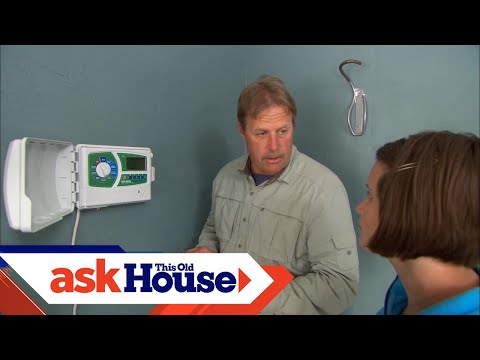
This Old House plumbing and heating expert Richard Trethewey explains the extreme importance of maintaining your water heater’s temperature-and-pressure relief valve.
SUBSCRIBE to This Old House: http://bit.ly/SubscribeThisOldHouse

Steps for How and Why to Maintain a Temperature-and-Pressure Valve:
1. Regardless of the type of water heater, whenever water is heated, it expands. And the water-heating system must accommodate the expansion. Otherwise an explosion could occur.
2. Expanding water can move out the cold-water line. However, if there’s a pressure-reducing valve mounted near the water main, the valve can block expansion.
3. Adding an expansion tank to the heater can accommodate a certain amount of expansion.
4. All water heaters are equipped with a thermostat that controls the water temperature.
5. If the thermostat fails and pressure builds up in the tank, the temperature-and-pressure relief valve will open and discharge built-up steam and hot water.
6. Temperature-and-pressure relief valves should always be connected to a discharge pipe that extends down to the floor.
7. Once a year, open the valve to flush out minerals and sediment.
8. Never install a plug into a temperature-and-pressure relief valve. And if you see a plug in the valve, turn off the water heater and immediately call a plumber.
9. To prevent someone from plugging the valve, install a tamperproof adapter.
10. If you see water dripping from the discharge tube, turn off the water heater and call a plumber. The temperature-and-pressure relief valve should be replaced.

About Ask This Old House TV:
Homeowners have a virtual truckload of questions for us on smaller projects, and we’re ready to answer. Ask This Old House solves the steady stream of home improvement problems faced by our viewers—and we make house calls! Ask This Old House features some familiar faces from This Old House, including Kevin O’Connor, general contractor Tom Silva, plumbing and heating expert Richard Trethewey, and landscape contractor Roger Cook.

Follow This Old House and Ask This Old House:
Facebook: http://bit.ly/ThisOldHouseFB
Twitter: http://bit.ly/ThisOldHouseTwitter
http://bit.ly/AskTOHTwitter
Pinterest: http://bit.ly/ThisOldHousePinterest
Instagram: http://bit.ly/ThisOldHouseIG
http://bit.ly/AskTOHIG
Tumblr: http://bit.ly/ThisOldHouseTumblr

For more on This Old House and Ask This Old House, visit us at: http://bit.ly/ThisOldHouseWebsite

How and Why to Maintain a Temperature-and-Pressure Valve | Ask This Old House
https://www.youtube.com/user/thisoldhouse/

(Visited 16,079 times, 1 visits today)

ADVERTISMENT – become one of us and contribute knowledge


You Might Be Interested In

Comment (0)

  1. This happened to the husband's great grandfather, while he was in the house. He made it three feet to the door, when the resulting fire and more importantly smoke, got him. He was like old. Not that oh your 50 old no like that 80 or 90 old.

  2. I ought a replacement today. Mine was corroded shut. I noticed the new one I bought from lowes is a 105000 steam pressure. My own one was a 100000. Should I be concerned? Or does not really matter?

  3. Nice, informative video. Thanks to the makers. I did grin when I heard the fellow state that if the pressure relief valve was plugged, turn the water heater off, call a plumber and get out of the house. Let the plumber deal with the potential bomb that a hot water heater can become while he walks into the house you stay outside?

  4. Let's not forget kids, water can expand when heated, up to 1600 times IN VOLUME so if pressure builds to an unsafe level it will relieve one way or another.

LEAVE YOUR COMMENT

This site uses Akismet to reduce spam. Learn how your comment data is processed.