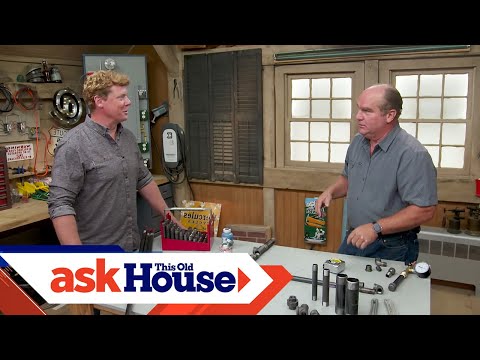
How to Work with Gas Pipes | Ask This Old House
ADVERTISMENT – become one of us and contribute knowledge
You Might Be Interested In
Comment (0)
LEAVE YOUR COMMENT
You must be logged in to post a comment.
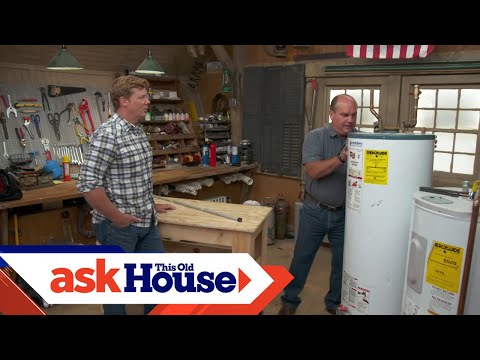
Ask This Old House plumbing and heating expert Richard Trethewey explains how gas piping is installed in a home.
SUBSCRIBE to This Old House: http://bit.ly/SubscribeThisOldHouse
Skill Level: Expert – for licensed professionals only
Steps:
1. In general, residential houses start with 1” gas pipes at the gas meter and then branch out to smaller diameter pipes using T fittings as they reach their appliance destinations.
2. To connect gas appliances to the main branch, there are gas pipes that come in a variety of lengths that you can piece together to reach each appliance. They are secured with pipe dope and gas fittings. Because of the way the threads work, piping always has to start at the source and work its way outward towards each appliance.
3. It’s also possible to thread your own gas pipes at the exact length you need if you have a pipe threading tool.
4. Before turning the gas back on, any professional will test for leaks by connecting a manometer to the pipes, locking in the air pressure, and waiting overnight to see if the pressure drops.
5. If the new gas work passes the manometer, a soap test should also be done as the gas is turned back on. If the soap solution bubbles over any of the new work, that means there is a leak.
Resources:
Richard emphasizes that only a licensed professional should work with gas. The materials they use for gas pipe fittings, including the pipes, nipples, and pipe dope, can be found at home centers and plumbing supply houses.
About Ask This Old House TV:
Homeowners have a virtual truckload of questions for us on smaller projects, and we’re ready to answer. Ask This Old House solves the steady stream of home improvement problems faced by our viewers—and we make house calls! Ask This Old House features some familiar faces from This Old House, including Kevin O’Connor, general contractor Tom Silva, plumbing and heating expert Richard Trethewey, and landscape contractor Roger Cook.
Follow This Old House and Ask This Old House:
Facebook: http://bit.ly/ThisOldHouseFB
Twitter: http://bit.ly/ThisOldHouseTwitter
http://bit.ly/AskTOHTwitter
Pinterest: http://bit.ly/ThisOldHousePinterest
Instagram: http://bit.ly/ThisOldHouseIG
http://bit.ly/AskTOHIG
Tumblr: http://bit.ly/ThisOldHouseTumblr
For more on This Old House and Ask This Old House, visit us at: http://bit.ly/ThisOldHouseWebsite
How to Work with Gas Pipes | Ask This Old House
https://www.youtube.com/user/thisoldhouse/
You must be logged in to post a comment.
This site uses Akismet to reduce spam. Learn how your comment data is processed.
Hi,we're professional manufacturer of gasoline HDPE pipes.HDPE pipe is simpler, more efficient and longer life cycle.Contact me if interested.
Having enough volume and pressure being delivered to the appliance means everything with gas. Before I retired in 2016, I worked for the gas utility company in Baltimore. Sometimes we'd have a distribution problem when a large building converted from oil or coal to gas and a larger service pipe was tapped into the main to supply the new heating plant. Occasionally, there would be too much demand on the main between the new and existing customers when the new heating system would cut on and the main pressure would drop too low from insufficient gas volume. We'd then have to do a system reinforcement installation to boost the gas supply requiring either a larger main being laid for the new service or tapping a nearby higher pressure main and installing a pressure regulator station and back feed main tapped into the old main near the customer's service pipe. The same is true with a building having multiple gas appliances – you have to have the correct size pipe so that each appliance gets a sufficient supply of gas volume at the pressure required even when all the appliances are operating at the same time.
Awesome content! We just created a video on why viewers might need a gas line in their homes! Check it out here: https://youtu.be/Chl_Cuf-la0
you basically learn nothing from this video. it is not a DIY vid and also it doesn't go into detail the purpose of the size of pipe and how it affects pressure. A lot of things left out that would have been nice. lame
Imagine how much of a cheap POS you have to be to put your kids lives in danger because you are too pathetic to pay a professional lol.
My home Depot has a threading machine right there, guy will cut to length and cut threads no extra cost
Size matters.
I find running a candle underneath all the fittings is an excellent way to find leaks
The reason they left out a lot of information and used lots of fittings is because they don’t want people dealing with gas pipes. Minor plumbing is one thing but gas pipes usually should be left to a pro if you’ve never done it before.